
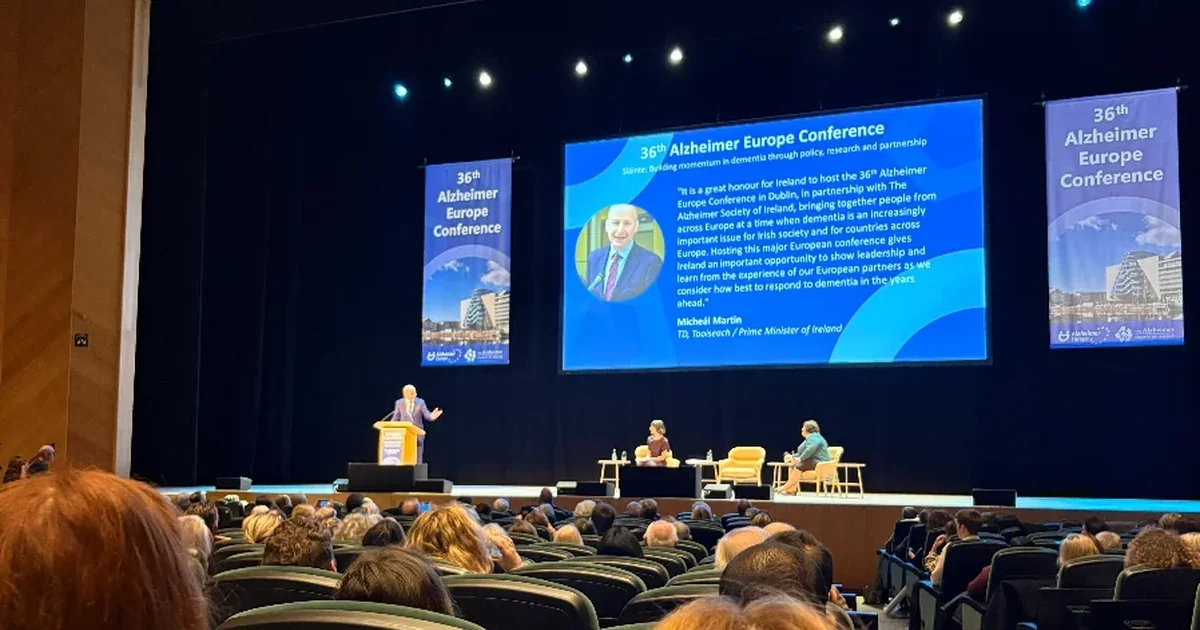
The Alzheimer Europe Conference 2026, the 36th edition, took place in Dublin from 27 to 29 October 2026. Menta attended with a poster on a pilot study of dementia-adapted video content. Here we share what the conference was about, what we presented and what comes next.
The starting point is a familiar question about dementia and TV. Ordinary television, with its quick edits and sudden sounds, can be tiring for someone living with advanced dementia. We wanted to observe how calmer, plot-free video content is received instead.
The conference in Dublin
The Alzheimer Europe Conference brings together researchers, care professionals, organisations and people living with dementia every year. In 2026 it returned to Ireland for the first time since 2005. This year's theme was "Sláinte: Building momentum in dementia through policy, research and partnership".
Posters were on display throughout the conference, and delegates could talk directly with the people behind them. For us, those face to face conversations were the most valuable part.
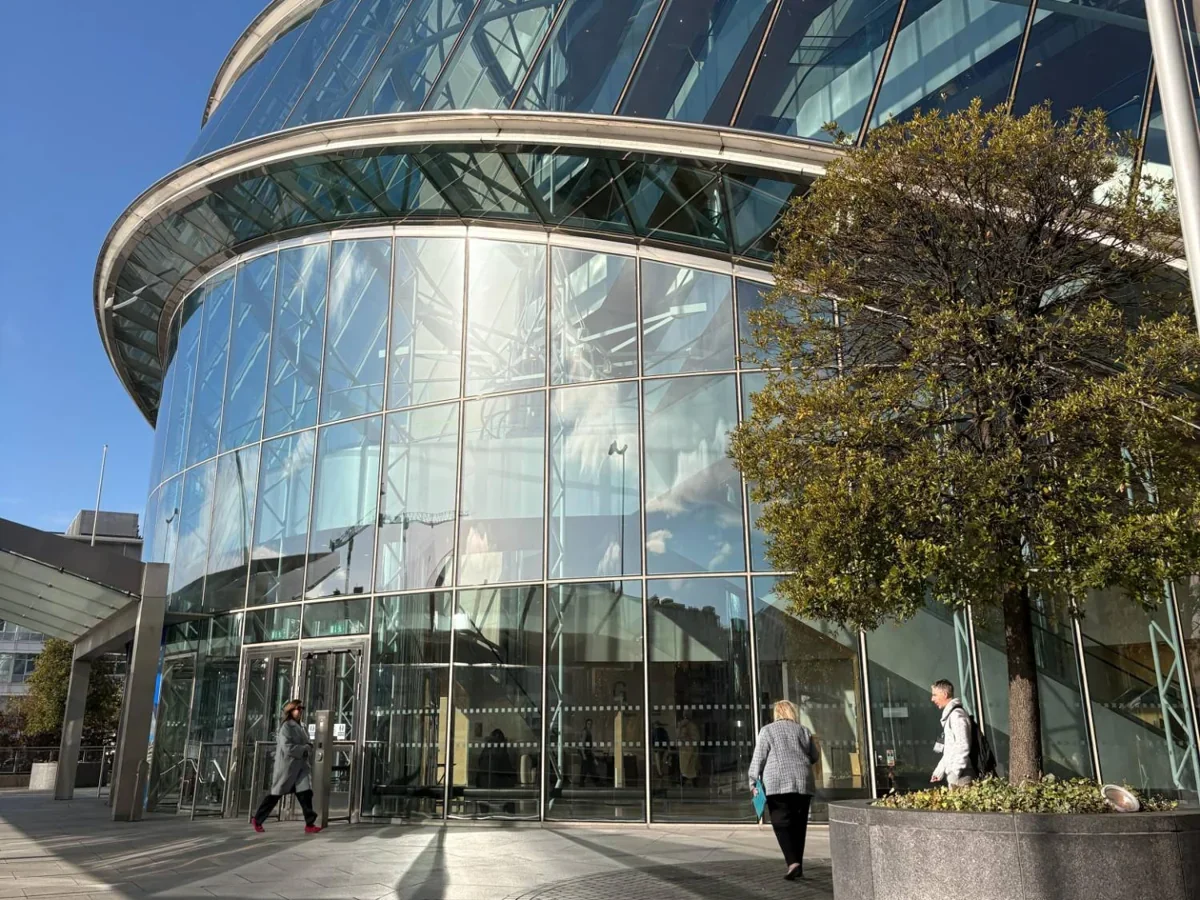
What we presented at the Alzheimer Europe Conference 2026
Our poster was listed in the conference programme as POS15-50, in the session "Care approaches and services: Psychosocial interventions". It was presented by Menta co-founder Yelda Uzun. The original title of the study is:
Effects of Dementia-Adapted Plot-Free Video Content on Behavioral Symptoms, Engagement, and Spontaneous Motor-Language Responses: A Multicenter Mixed-Methods Pilot Study
The full programme is available in the conference programme book.
Why plot-free content
Watching a series or a film means remembering what happened in the previous scene. For someone living with advanced dementia that is often not possible, and losing track of a story can lead to restlessness. Plot-free content can be watched from any moment: a garden, a fish swimming or calm music does not require knowing what came before.
Menta's videos are made with this idea in mind: a gentle pace, no sudden transitions and no startling sounds. In this study we wanted to observe how that approach is received in everyday care settings.
Aims and methods
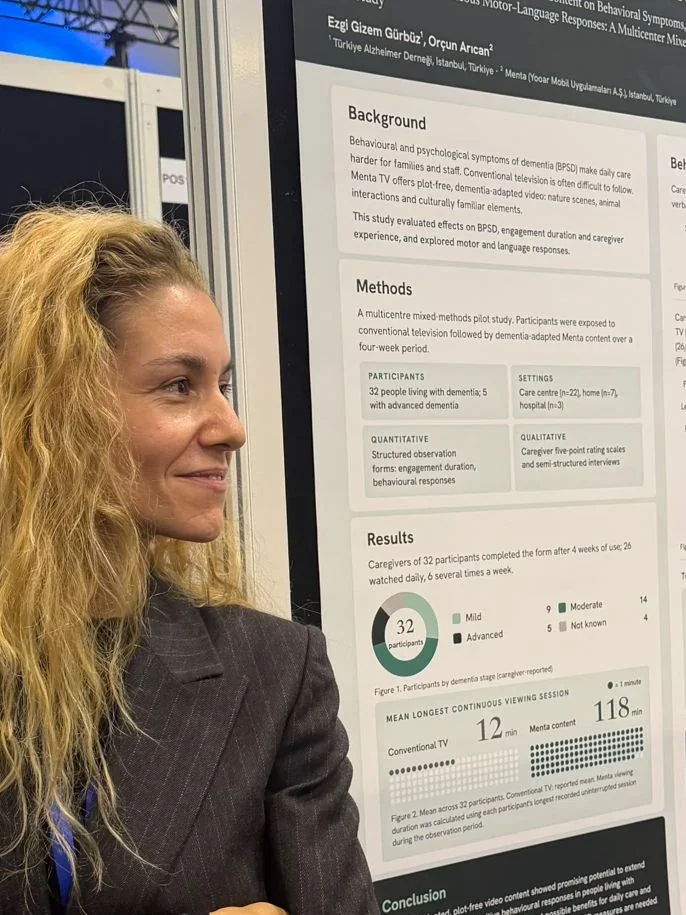
The study set out to evaluate how dementia-adapted video affects behavioural and psychological symptoms of dementia (BPSD), engagement time and the caregiver experience, and to explore motor and language responses. It was a multicentre, mixed-methods pilot study carried out as a collaboration between Menta and Türkiye Alzheimer Derneği, the Turkish Alzheimer's association.
Thirty-two people living with dementia took part, five of them with advanced dementia. Participants were in hospital, at home or in a care centre. Each person watched both conventional TV and Menta content, so the two could be compared.
After one to four weeks of use, caregivers completed a form covering viewing time and five-point ratings, and semi-structured interviews were held. Twenty-six participants watched Menta daily and six several times a week.
What we observed
- Mean continuous viewing time was 118 minutes with Menta content and 12 minutes with conventional TV.
- Of 32 caregivers, 26 agreed that Menta held attention longer than TV, 25 that it reduced agitation and 26 that mood was better after viewing.
- Nineteen caregivers said it eased daily care and triggered interaction.
- Caregivers reported a spontaneous motor response in 6 participants and a spontaneous verbal response in 7.
We also shared two striking observations from people with advanced dementia. One participant with longstanding swallowing difficulties began chewing spontaneously while watching a gorilla eat. Another, previously unresponsive to simple questions, said "They are walking" while watching a child's first steps.
These findings suggest that dementia-adapted, plot-free video may extend engagement and encourage motor and language responses. This is a pilot study, however, and much of the data comes from caregiver reports; larger controlled studies with standardised BPSD measures are needed.
Yelda Uzun: "Dublin was a very productive few days for us"
"Dublin was a very productive few days for us. Seeing our work on Menta resonate in Europe, and draw this much interest, made us very happy."
Yelda Uzun, co-founder of Menta
What comes next
The pilot results point to the need for larger, controlled research. In the coming period we will keep working in that direction and bring the feedback we received at the conference into our content.
To read more about dementia technology and our research, visit our research page. For practical tips on screens at home, see our guide to TV for people with dementia.

